…well, friends, here we go again. I have another novel coming out this fall! But this time, I’m starting—and ending with a question for you:
 Do you know, or do you know someone whose life has been affected by their own or someone else’s addiction? (I’m asking specifically about addiction to a chemical substance, as opposed to other possible addictions such as gambling, screen time, and other uncontrolled behaviors.) It might be alcohol. It might be pain pills, like oxycontin, or Percocet. Could be Xanax. Adderall. Anything that might be prescribed or bought on the internet or from a friend or, legally– in a liquor store or bar or even in a pharmacy—at least originally.
My next novel deals with substance abuse and how it affects people in ever-widening circles radiating out from the addict. Of course, it generally affects family members the most directly and destructively—in addition to the profound damage it does to the life of the addict. Friends become involved, sometimes as support people for the family members, sometimes as enablers. Sometimes just as people who know about what’s going on but feel genuinely helpless to do anything helpful.
Have you ever been in one of those positions?
I have been in all of them. Some people in my own big family—on both sides—have struggled with alcoholism and drug addition, and there have been serious illnesses and deaths caused by both. The toll this takes on survivors can be devastating. Blame gets dished out, guilt endures, recovery is slow, painful, and ambiguous if and when it occurs. And in my life as a therapist, I have dealt—not with substance abusers themselves because that is very much a specialty that is separately licensed—but with people whose lives have been affected by them. Often, their survivors.
But this novel is not about me, nor about anyone I know or have known. I wouldn’t do that. It’s about one way addiction can begin, rather innocently, and how the people around addicts get drawn in and affected. It’s about danger, the difficulty of breaking free, family dynamics, elder care, rural crime, and it’s about what constitutes justice, how people get there or don’t. And lastly, it’s about the possibility of hope. The power of survivors when they band together.
So, again the question: Have you or anyone you’ve known had his/her life touched by substance addiction? If you’re willing, perhaps add how it is or was affected? (I’m not wanting anyone to identify individuals! Please don’t be deterred from responding. You can use a category (like relative, friend, neighbor, work colleague, or make up a name, or whatever you want!)
Anything you’re willing to share can go in the section for comments below—scroll down to it! (please don’t use the reply key as it will only go to me individually and won’t then be part of the conversation. I read and respond to every one! You may also comment, if you wish, on what someone else has said here by using their first name.)
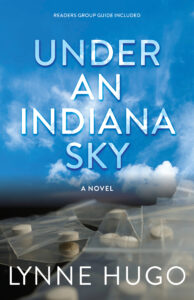
As always, I’m sharing the cover of the new novel with you first, before anywhere else. It will publish on October 13, this coming fall.
So, as I said, another opening, another show…and I can’t tell you how grateful I am for your interest and support. (And, I hope, for answering the question.)
Please forgive me for responding to your question with a question. Can there possibly be any one in today’s world who won’t be able to answer your question in the affirmative?
You know, Preston, that’s almost exactly what I’ve been thinking. The social issue underlying this novel is opiate addiction, which isn’t all that different from any addiction. I’m often asked by, for example, the publicist or editor or marketing person: what is the audience for this novel? Who will it appeal to, who will it interest? In this case, I feel like I’m writing about something that has touches pretty much everyone’s life at some point or another–some more pervasively than others, certainly. But we all know someone…
There was a time in my life that I was a textbook enabler — I thought I could and should fix the problem and then beat myself up when I couldn’t. Since he has died (from his addiction), I’ve managed to find myself again and finally realized (with the help of an excellent therapist) that I couldn’t fix the problem.
Susan, I think that what you’ve shared is a lot more common that we may know–perhaps excepting the healthy realization that you couldn’t fix the problem. I think that shedding a sense of guilt and responsibility is the hardest–“I should have seen, I should have done, I should have…etc.” I am so glad you’ve had really excellent help. Thank you so much for your comment.
Lynn, I’m so looking forward to this one. Your books are always so beautifully written, and this sounds like a story that will touch many hearts.
Addiction has affected my life in just about every way you describe—through people I’ve loved, through my own struggles, and through growing up in a family deeply shaped by generations of alcoholism and addiction. The effects can last a very long time.
I’m grateful you’re writing about this with such honesty, compassion, and hope.
Hi Dana–Just one of the ways my own life has been touched by addiction is by alcoholism. My grandfather was an alcoholic and five or six of his eight children ended up as such. In a couple of cases especially, as they aged and I grew became an adult with my own family, I saw alcoholism destroy them. My dad, the oldest, and one of my aunts, the second oldest, were two were not alcoholic. I remember how many times my dad warned me when I was a teenager to “always be careful, if you drink, watch it! Alcoholism runs in our family and you’d be susceptible.” (I never once saw my dad have too much to drink. And to this day, especially now when I abstain for the most part, I’ve never forgotten.) Thank you for sharing, and for looking forward to the novel. That means a lot to me.
My parents divorced in 1960, when I was just 10 years old. Both parents remarried alcoholics, although neither of them were one at that time. None of my friends had divorced parents, so I really did not talk to anyone about the situation. When my mom and her second husband started to have issues, my sister and I were sent to live with my father and his new wife. Her two children, 7 year old daughter and 4 year old son were part of the household, and soon a baby boy joined the family. It was after the birth, that life fell apart. My father was a traveling salesman, who left Monday morning, and returned Friday night. My stepmother began to drink, shut herself in her room, and my sister and I cared for the kids and the home. I told my father what was happening, but he chose not to believe me. One day I arrived home to find my baby brother cold, soaking wet, crying with a sandwich thrown into the crib. That did it for me. I gave him a bath, fed him and left the house with him, taking refuge at a neighbors and refused to return until my father came home. You see, it was a big secret, and now the neighborhood knew. My mother’s relationship had deteriorated, and she came to get us. We eventually returned to my stepfather, experienced his alcoholic rages, loss of jobs, and more! My sister, 3 years older than me, got the worst of it. Both stepparents picked on her because she was the weaker one. She led a tragic life, despite my interventions. My father did not support us. He stopped speaking to me for a few years. When I asked him why, he told me he was afraid I would say something to her that would make her drink! I am proud of the person I have become, and that I could rise above my upbringing. But I am well aware that it has impacted me.
Oh Wendy, after their divorce, both your parents chose alcoholics when they remarried! how strong and resilient you have been and are to have had to cope with zero competent and loving parental protection and to have become the protector yourself. You have every reason to be proud of yourself. I think it’s really good that you understand how much early experiences like yours have impacted you–they would anyone. Thank you so much for sharing your story, which is a really good example of how addiction radiates out and affects the family and others (example: the neighbor to whom you retreated and wisely revealed the big secret).